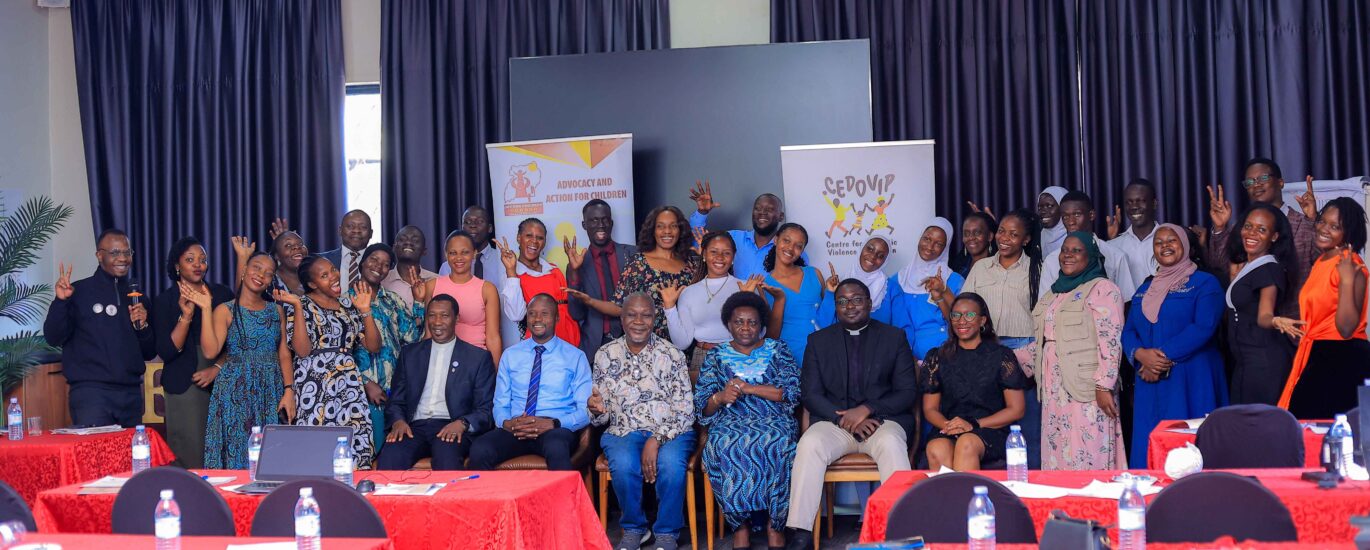
National Stakeholder Dialogue on Ending Child Marriage and Teenage Pregnancy in Uganda: Outcomes and Recommendations
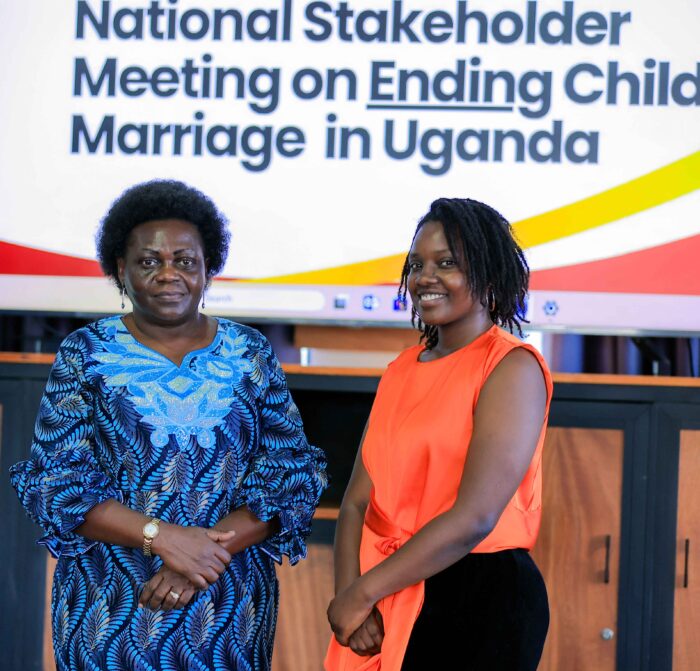
On June 17th 2026, Joy for Children Uganda, in partnership with Centre for Domestic Violence Prevention (CEDOVIP), convened a National Stakeholder Dialogue on Ending Child Marriage and Teenage Pregnancy to assess progress in implementing Uganda’s National Strategy to End Child Marriage and Teenage Pregnancy (2022/23–2026/27), identify persistent gaps, and build consensus on priorities for the next phase of action.
The dialogue brought together representatives from government ministries, Parliament, civil society organizations, faith-based institutions, cultural leaders, development partners, academia, and, most importantly, children themselves. The meeting reaffirmed a shared commitment to protecting every child’s right to education, safety, health, and a future free from violence and exploitation.
A Timely Response to Child Marriage and Teenage Pregnancy in Uganda
Uganda has made significant progress in strengthening policies and legal frameworks, like the Penal Code act that protects children from abuse and the National Child policy that contributes greatly to the protection of children’s rights. Despite these frameworks, child marriage and teenage pregnancy continue to undermine the rights and opportunities of thousands of girls and boys.
According to UNICEF, approximately one in three girls is married off before the age of 18, while one in four girls aged 15-19 has begun childbearing. These realities continue to interrupt education, expose children to violence and poor health outcomes, and perpetuate cycles of poverty.
Recognizing that the current National Strategy is approaching its end, stakeholders met to reflect on achievements, examine implementation challenges, and propose practical recommendations that will shape future programming, policy reforms and the new successor National Strategy to End Child Marriage and Teenage Pregnancy in Uganda.
Parliament Calls for Stronger Legislation
Members of Parliament used the dialogue to advocate for stronger legal protections for children. Government officials called for stronger community accountability, faster judicial processes for child protection cases, corruption-free service delivery, and increased investment in prevention programmes.
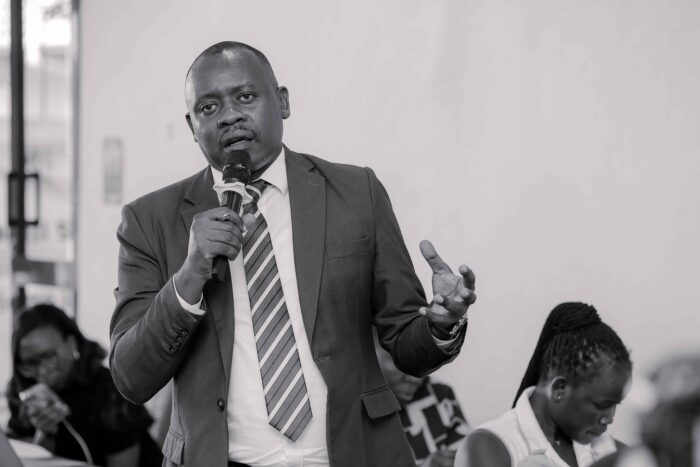
The outgoing chairperson of UWOPA, Hon. Sarah Opendi emphasised the urgent need for comprehensive legislation to strengthen accountability for child marriage and sexual violence, noting that while Uganda has progressive policies, implementation remains a significant challenge.
She emphasized that ending ‘child marriage cannot be the responsibility of one ministry alone but requires coordinated action by Parliament, government ministries, parents, schools, religious institutions, cultural leaders, civil society organizations, and children themselves.’
Throughout the discussions, persistent challenges were highlighted, including:
- Weak enforcement of child protection laws.
- Limited access to schools and essential services, particularly in rural communities.
- Inadequate financing for implementation of the National Strategy.
- Low conviction rates for child-related offences.
- Harmful social norms that continue to normalize child marriage.
- Gaps in data collection and accountability systems.
A Collective Call for Stronger Action - Govt Reaffirms Commitment
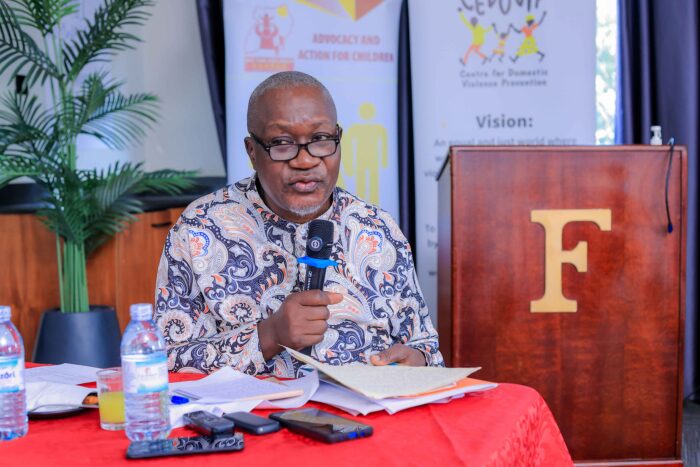
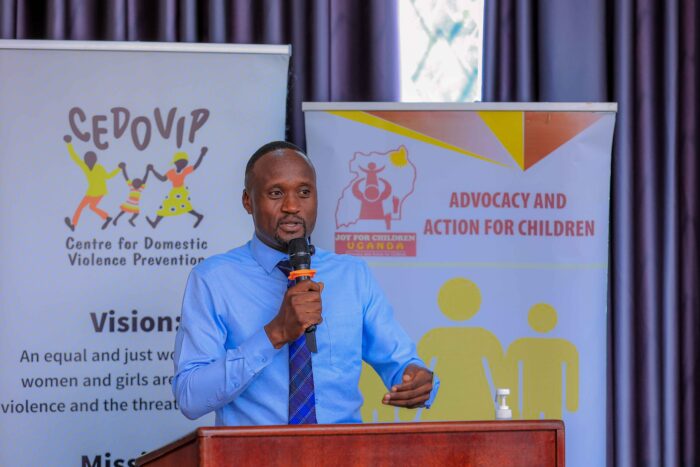
In his opening speech, guest of honor, Assistant Commissioner for Children and Youth Affairs, Ministry of Gender, Labour and Social Development, Mr. Mondo Kyateka mentioned that the the biggest reason for child marriage is poverty, which leads to school dropout and eventually early marriage. For this reason, the Government of Uganda has ‘set aside 2.49 trillion in the financial year 2026-2027 towards wealth creation to enable people to understand that children are not enterprises where wealth and money can be gathered.’
This commitment was made in reference to the alarming statistics. Mr. Mondo highlighted that “If we have 34% of our children getting married before the age of 18 and 7% before the age of 15 years and we have 24.5% teenage pregnancy in this country which is endowed by nature, that is a problem.” He went on to express his displeasure with these statistics, stating that “it offends the constitution, it offends the Children’s Act and it offends all parameters that we can think about.”
In his conclusion, he expressed his happiness with the relevance of the convening and how it will serve to examine the extent to which the national strategy to end child marriage and teenage pregnancy 2022, 2023, 2026, 2027, has been executed
Children's Perspectives Inform National Action on Child Marriage and Teenage Pregnancy

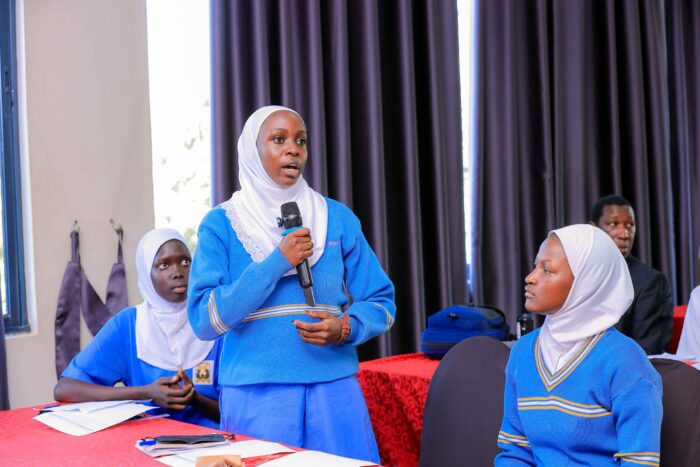
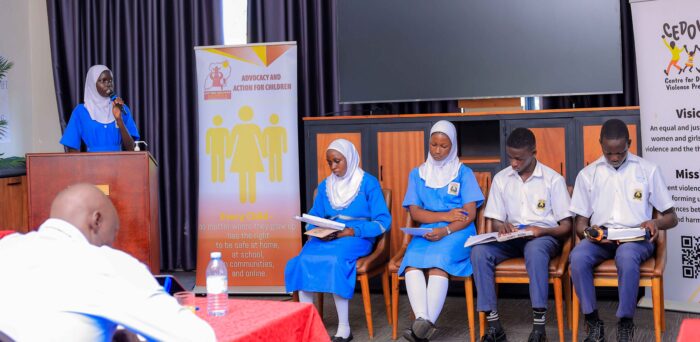
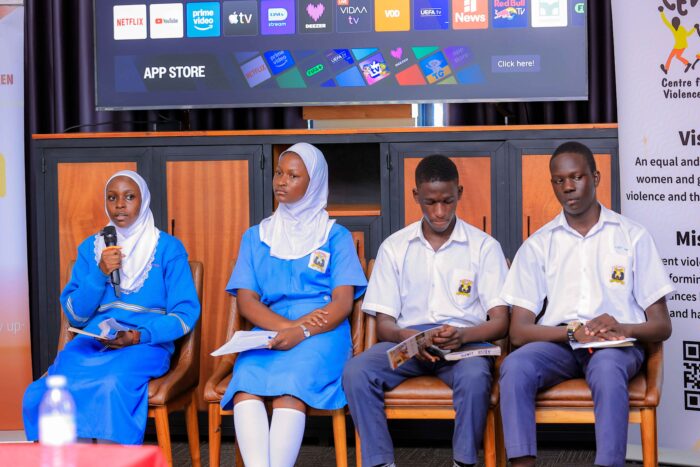
One of the defining moments of the dialogue was the deliberate inclusion of children through Joy for Children Uganda’s Model of Child Participation guided by the National Child Participation Strategy.
Students from Kawanda Secondary School actively participated in the discussions, sharing their experiences and perspectives on child marriage and teenage pregnancy.
The students spoke openly about how early marriage:
- Forces children out of school.
- Leads to poor health outcomes and emotional distress.
- Increases poverty and limits future employment opportunities.
- Causes stigma, social exclusion, and loss of self-esteem.
- Affects both girls and boys through school dropout, depression, and broken family relationships.
The young participants also proposed practical solutions, including peer-to-peer awareness campaigns, school outreach programmes, youth-led advocacy, mentorship initiatives, community sensitization through songs and poetry, and encouraging young people to make informed life choices.
Their contributions demonstrated the importance of creating safe spaces where children are not only heard but actively influence decisions that affect their lives.
Collaborative Action to End Child Marriage and Teenage Pregnancy in Uganda
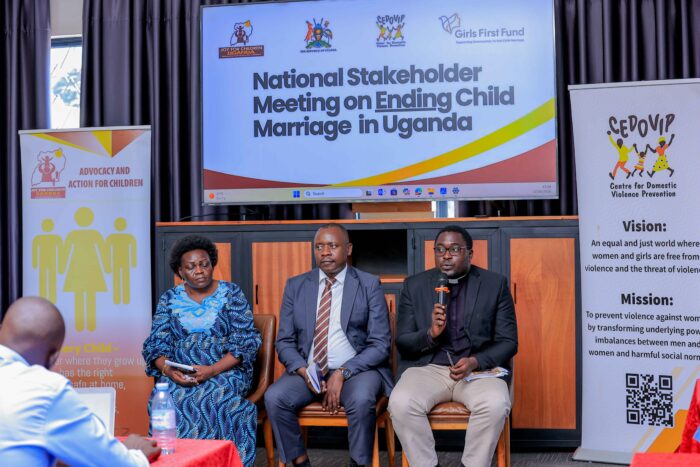
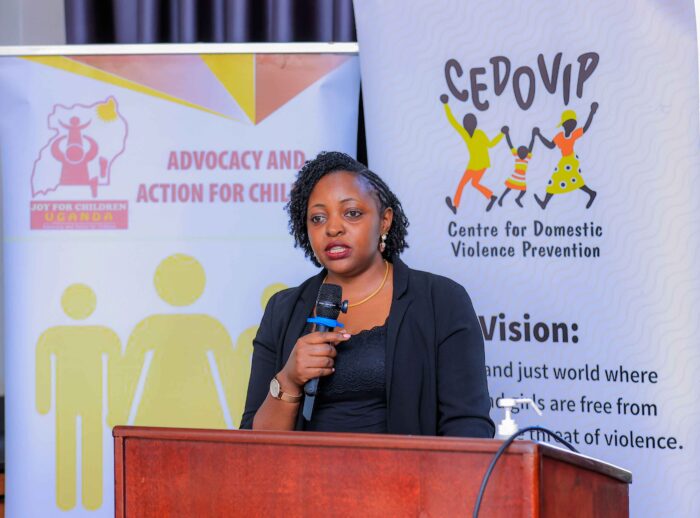
Panel discussions featuring Mr. Gooloba, Hon Sarah Opendi and Reverend Nathan on the first panel discussing progress on the National Strategy. The second panel featured participants from Civil Society Organizations (CSOs), discussing innovations and practices from CSOs and partners. Representatives included Peninah Igaga from CEDOVIP, Ian Kikomeko, the team lead at Touch The Heart Uganda, and Solomon Kisakye representing Women Probono Initiative, Nabanja Faridah representing Mpigi Women with Disabilities, and Pillar from Raising Teenagers Uganda.
Discussions highlighted several priority areas for the next phase of implementation, including:
- Strengthening community accountability structures.
- Improving enforcement of existing child protection laws.
- Expanding access to quality education.
- Increasing support for survivors of violence.
- Promoting positive parenting.
- Engaging boys and men as allies in preventing child marriage.
- Leveraging digital innovation to improve awareness, reporting, and access to support services.
- Building stronger partnerships between government and civil society.
Panelists also emphasized that harmful social norms can only be dismantled through continuous community engagement, evidence-based programming, and meaningful participation of children and young people.
A Shared Call to Action
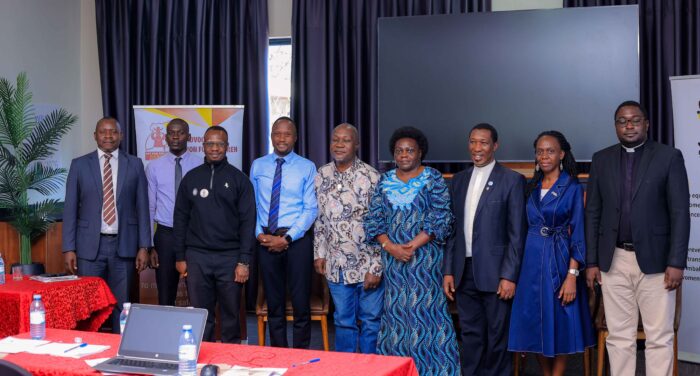
The dialogue concluded with a renewed commitment from stakeholders to accelerate efforts to end child marriage and teenage pregnancy in Uganda.
Participants called for stronger implementation of existing policies, greater investment in child protection systems, improved documentation and evidence generation, establishment of youth-friendly services and youth hubs, enhanced digital interventions, and stronger local government structures.
There was also a collective appeal to parents, community leaders, religious institutions, and cultural leaders to protect children, reject harmful practices, and ensure that every child has the opportunity to remain in school and reach their full potential.
In his closing remarks Joy for Children’s Executive Director, Moses Ntenga, called on all stakeholders to move beyond dialogue and translate their commitments into concrete action. He emphasized that meaningful progress in ending child marriage and teenage pregnancy will only be achieved through collective accountability and sustained implementation of agreed interventions. He also reminded participants that the current National Strategy to End Child Marriage and Teenage Pregnancy is approaching its expiration, emphasizing the urgency of reviewing, strengthening, and renewing the strategy to sustain momentum and accelerate progress in protecting Uganda’s children.
As Uganda prepares for the next phase of its National Strategy, the dialogue succeeded in reaffirming that sustainable progress can only be achieved through coordinated action, shared accountability, and meaningful participation of children themselves.
This dialogue demonstrates that action is collaborative, and it is everyone’s mandate to end child marriage and teenage pregnancy. Additionally, children are not merely beneficiaries of child protection interventions, they are powerful advocates whose voices must remain at the centre of efforts to end child marriage and teenage pregnancy.
Together with our partners, we remain committed to advancing children’s rights and working with government, communities, and children to build a Uganda where every child grows up safe, protected, and empowered to realize their full potential.
Snapshots From the Event