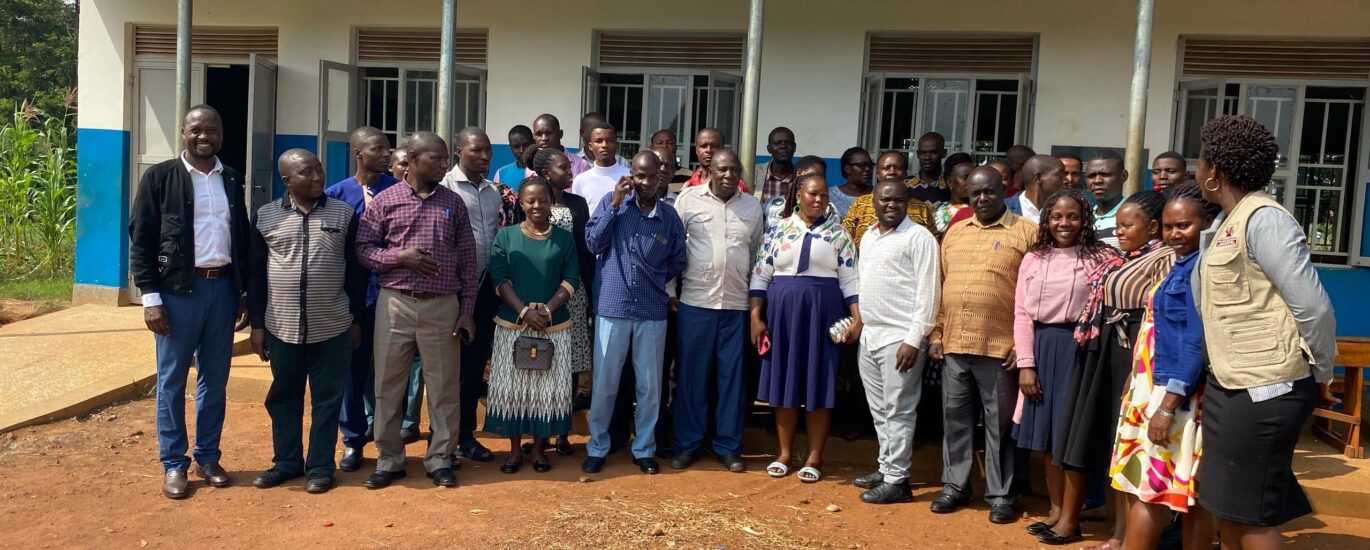
Joy for Children Uganda has accelerated its efforts to protect children in schools from violence by conducting a series of trainings for educators on Violence against Children (VAC) and Gender-Based Violence (GBV) prevention and response. A total of 380 (141 female 236 males) teachers drawn from 17 districts in Western Uganda under the Uganda Secondary Education Expansion Project (USEEP) – Lot 3 project area participated in the trainings. Each school was represented by key staff, including head teachers, deputy head teachers, senior men and women, directors of studies, and teacher representatives. These individuals were selected deliberately because of their influence on school policy, discipline, and learner wellbeing.Joy for Children Uganda in partnership with Windle International Uganda is implementing the Uganda Secondary School Project (USEEP) Lot 3 for a period of 15 months in 17 districts of Western Uganda that are: Buliisa ,Hoima, Kiryandongo, Masindi, Kibale, Kagadi, Kakumiro, Kikube, Bunyangabu, Kasese, Ntoroko, Bundibugyo, Kamwenge, Kitagwenda, Kyegegwa, Kyenjojo, and Kabarole.
These trainings sought to familiarize teachers with the USEEP project and to strengthen their ability to create safe, inclusive learning spaces for all children. It covered the definitions, forms, causes, and effects of VAC and GBV, and emphasized national, regional, and international policy frameworks such as the Children’s Act of 2016, the Gender in Education Policy, and the National Strategic Plan on Violence Against Children. The sessions also explored mechanisms for reporting, tracking, and responding to cases of abuse, as well as strategies for engaging stakeholders and communities in child protection. Inclusive education and environmental protection were discussed as part of creating holistic and nurturing learning environments.
During the discussions, teachers shared the challenges they face in preventing and responding to violence. Overcrowding was a recurring concern, with one deputy head teacher noting, “In Kyabenda SS, a stream has between 100–120 students. It is hard for one teacher to know each and every student’s behavior and issues affecting them on top of the workload we have.” Mental health issues among students were also identified as a growing problem, with many teachers lacking the skills to manage them. “There are so many mental health-related issues, and most teachers do not have the expertise to handle them. Sometimes, the only remedy schools have is to expel the student,” one senior teacher explained.
Teachers also observed that violence in homes and communities undermines student concentration and performance. “There is a lot of violence in homes and communities, which hinders students from concentrating at school. Sometimes they do not disclose what they are going through,” one participant said, calling for community sensitization. School dropouts remain a major concern, driven by poverty, long distances to school, poor parenting, and in some cases, student hostility toward education. A head teacher in Nyakasenyi remarked, “Parents and students are willing, but they lack school fees and other scholastic materials. Some students, even with resources available, refuse to study and can be hostile.”
Gender inequality was also highlighted. In certain communities, boys are prioritized for education and property rights, while girls are married off early. “Some parents believe educating a girl is a waste of resources since the end result is marriage,” a participant shared.
Teachers further noted that the boy child is often overlooked in social support programs, which has contributed to rising dropout rates and crime among male youths. Another issue raised was weak community response to violence. “Sometimes you find boys smoking in the open while parents, community members, and even police officers watch as if nothing is wrong. Some parents even connive with perpetrators to avoid reporting cases,” one teacher lamented.
We believe that educators have a big role to play in ending violence against children. Teachers are on the frontline and are often the first to notice signs of abuse. They have a unique opportunity to identify and respond to cases promptly, to implement positive discipline strategies that promote respect and empathy, and to create safe spaces where learners feel comfortable reporting incidents without fear of stigma. Educators can promote gender equality by ensuring fair treatment for both boys and girls, engage parents and communities in child rights conversations, and model non-violent behavior that inspires change in both students and peers.
At the conclusion of the sessions, teachers made several recommendations. They called for the deployment of professional counselors in schools to address mental health needs, the introduction of parenting sessions at community level to tackle violence in homes, and longer training durations to allow for in-depth discussions. They stressed the importance of equal attention to both boys and girls in education and social programs and encouraged stronger partnerships between schools, government, and civil society to improve reporting and response systems.
Joy for Children Uganda will continue offering capacity enhancement and ongoing support to the trained teachers. To strengthen their ability to implement what they learned, the educators were provided with key policy documents and guidelines on the prevention of Violence against Children. They also received official case registers to document incidents handled within their schools. This not only ensures proper record-keeping and follow-up but also promotes accountability and consistency in responding to cases of VAC and GBV.