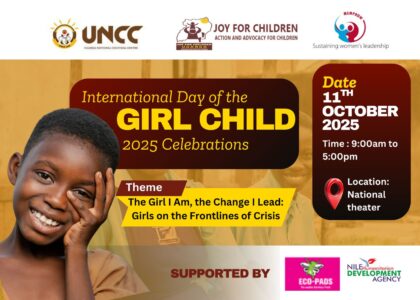
“The Girl I Am, The Change I Lead: Girls on the Frontlines of Crisis”
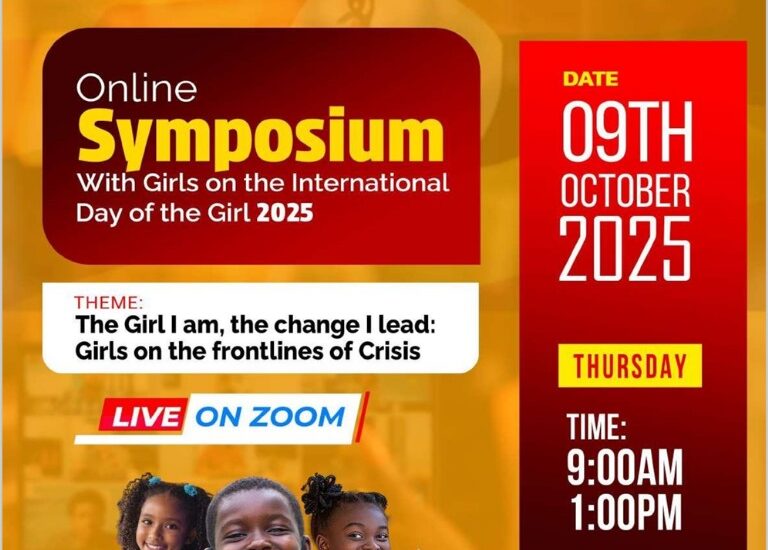
In commemoration of the International Day of the Girl Child 2025, the Ministry of Gender, Labour and Social Development (MGLSD), in collaboration with civil society organisations including Joy for Children Uganda (JFCU), Concern for the Girl Child, AHF Uganda Cares and others, convened a National Online Symposium. The event provided a platform for girls themselves to articulate their experiences, offer leadership, and engage in shaping strategies under this year’s theme: “The Girl I Am, The Change I Lead: Girls on the Frontlines of Crisis”.
The symposium reflected a clear intention to position girls not just as beneficiaries of programmes but as protagonists in their own right agents of change, especially when crisis strikes.
The International Day of the Girl Child is observed each year on 11 October. The United Nations General Assembly declared the day in December 2011 to recognise girls’ rights and the unique challenges they face worldwide.
Globally, the observance draws attention to critical issues such as gender-based discrimination, unequal access to education and health services, early and forced marriage, and violence against girls. Importantly, the day emphasises girl-centred empowerment: that when girls are supported, educated and engaged, they become powerful contributors to sustainable development, economic growth and social resilience.
In times of crisis be it climate shocks (droughts, floods), conflict, or economic instability girls are often among the most affected. But this year’s theme explicitly recognises that girls are also leaders in crisis: “Girls on the Frontlines of Crisis” underscores that they play active and constructive roles in their families, schools and communities during times of adversity.
Thus, the symposium tapped into a powerful global narrative: celebrating girls’ identities, their agency to lead change, and their capacity to adapt and respond in challenging contexts.
The symposium opened with a session led by Ms Emily Nankwalu giving an understanding of the theme that “The Girl I Am” speaks to embracing one’s identity, talents and aspirations. It is a call for girls to own who they are. Meanwhile, “The Change I Lead” affirms that each girl holds the potential to make a difference through speaking up, initiating community actions or supporting peers. The third component, “Girls on the Frontlines of Crisis”, highlights how girls’ contributions during emergencies or challenging times are important and often under-recognised.
In the panel session, four talented girls’ advocates explored the intersections of education, health, climate, nutrition, and leadership. Among them, Nakayiwa Rebecca of Joy for Children Uganda contributed:
“If parents and teachers are trained on better ways to raise children without violence, girls will feel safer and more supported to reach their full potential. It is also important to train and encourage girls to remain in school, and to promote tree planting in schools and communities to create cleaner, safer, and more sustainable environments for everyone.”
Her remarks underlined a holistic view: safe and supportive environments (home, school and community) are foundational for girls’ empowerment.
Another panelist reflected on menstrual health a critical yet often neglected issue:
“I want menstruation to be talked about openly without shame or stigma. Schools should have sanitary facilities and provide reusable pads. Boys also need to learn that menstruation is natural. When girls feel supported, they attend school confidently and perform better.”
And on the topic of early marriage and teenage pregnancy, one girl said:
“When you educate a girl, you educate a nation. Supporting girls’ rights is not a favour—it’s an investment in a better Uganda.”
Recommendations from the Girls
The girls co-created recommendations directed at specific stakeholders:
- Government: Strengthen implementation of laws and policies protecting girls from violence, early marriage and exploitation; increase funding and support for education programmes that keep all girls in school.
- Teachers and Schools: Create safe, inclusive spaces where girls can express themselves and take on leadership roles; incorporate mentorship and life-skills sessions to build confidence and self-esteem.
- Parents and Guardians: Support girls’ education and ambitions, encourage open conversations about issues such as menstrual health, peer pressure and career choices.
- NGOs and Civil Society: Provide platforms for girls’ participation and leadership at community and national levels; partner with government to design programs that respond to girls’ needs.