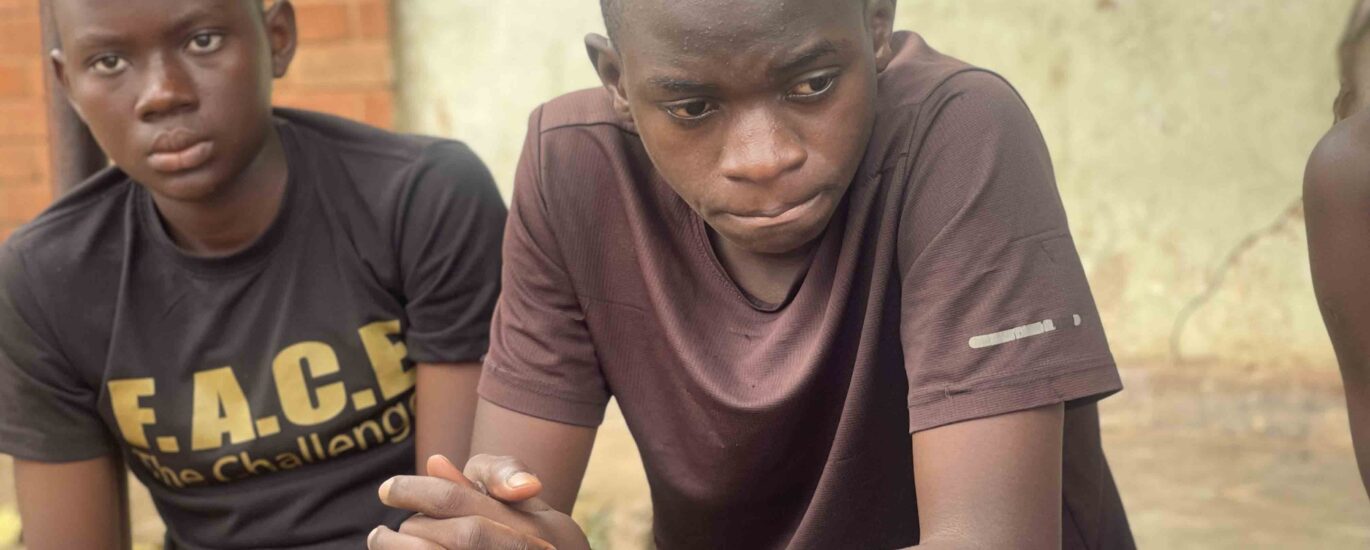
The loud slaps and harsh blows ring loud inside Jacob’s (not real name) mind, they even follow him to his paper thin bed on some nights, Tonight, his mother and father are having another altercation. The neighbors in the other makeshift houses are opening doors and standing out in groups discussing their home situation in very loud whispers, but not making any move to help. Even Jacob’s friends around Busia have parents that fight at home, but he doesn’t think it normal.
This time, there are threats of kicking him and his mother out on the street because she was seen talking to another man. His feeble 12-year-old mind finds all this too hard to comprehend, but he cannot dismiss it either, so he stands up to fight for his mother. Jacob’s face is instead subject to his father’s full force drunken anger and in an instant, his unconscious body hits the floor.
Jacob’s story is a reflection of the 550 million children living with mothers that are subject to intimate partner violence (IPV) worldwide. Children caught up in this, often find themselves secluded or isolate themselves so that no one gets to know their story. According to UNICEF, around 610 million children live with mothers who have experienced physical, emotional or sexual abuse by an intimate partner in the past year, making violence a part of their everyday lives.
Worldwide,the exposure of children to IPV is highest in Oceania, Central and Southern Asia, and sub-Saharan Africa, reflecting deep regional inequalities and a worldwide trend in domestic violence. In Uganda it is highest in the Acholi region (64%), Bukedi region (61%) and Elgon region (52%).
This form of violence sometimes leads to children being on the receiving end, contributing to the 1.6 billion children worldwide that regularly face violent punishment at home. Data showing the effects of exposure to violence on children in Uganda, is extremely limited. The absence of such data highlights that the children being exposed to violence in these violent homes are not part of the country’s priorities.
A child exposed to such violence will have mental side effects like anxiety, depression and trauma. They will have so many questions to ask but not know who or how to ask. Because of this stress the child will be deterred from performing to the best of their abilities in school and their day-to-day lives.
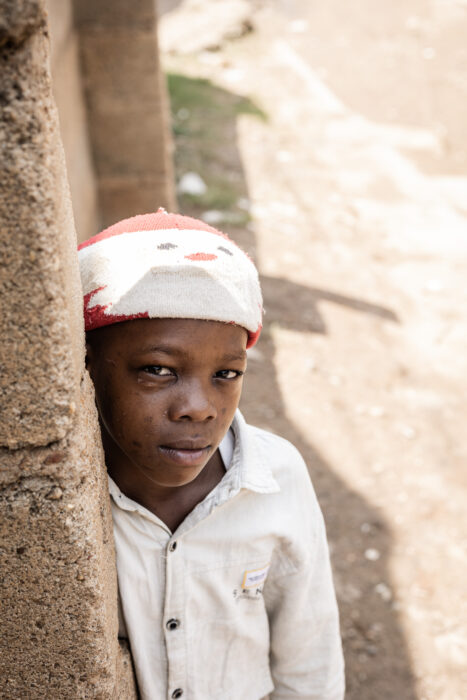
Physically, the child may acquire scars from all the times they tried to step in and the anger of the abuser turned on them. The child might get physically aggressive with those around them, from teachers to fellow peers and even with the abuser.
Finally, a child’s emotions will be imbalanced, with anxiety, aggression and confusion taking up so much space in their minds. It becomes very hard for the child to find peace in their world full of chaotic agression.
Violence against children, which encompasses various forms includes, sexual violence, harassment, abuse, and exploitation, stands as a critical challenge undermining child rights. In response, Joy For Children Uganda has adopted a holistic strategy aimed at protecting children and fostering a communitywide response to all forms of violence against them. JFCU prioritizes education, psychosocial and legal support as fundamental tools in combating violence against children.
JFCU has engaged in projects aimed at combating violence against children in districts like Kabarole, Lira, Oyam and Dokolo. Safe spaces have been established in these districts that provide IPV survivors with a community that supports them.
Despite these milestones, more action against intimate partner violence is required. In order to protect the children witnessing this violence in their homes, we must rise up and put an end to intimate partner violence and any other form of violence against children