Press Statement For International Day Of The Girl Child 2025
11th October 2025
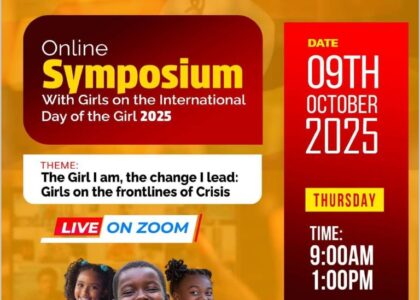
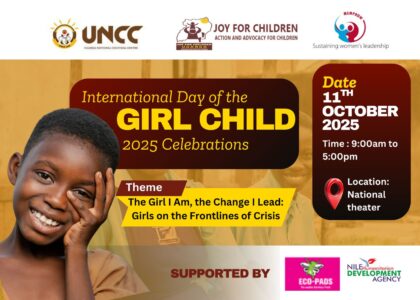
Today, on 11 October, Joy for Children Uganda (JFCU) joins the world to mark the International Day of the Girl Child (IDGC). This day was established by United Nations General Assembly Resolution 66/170 on 19 December 2011, which designated October 11 to recognize girls’ rights and the unique challenges they face. The 2025 theme, “The Girl I Am, the Change I Lead: Girls on the Frontlines of Crisis,” calls for recognition of girls as leaders in addressing crises including poverty, conflict, climate change, and gender-based violence.
We are proud to celebrate the achievements of girls in Uganda. Many are breaking stereotypes and overcoming barriers to education and empowerment. Enrolment of girls in primary and secondary schools has risen significantly. In the 2024 Uganda A-Level (UACE) national exams, 43.7% of girls earned three principal passes compared to 34.6% of boys, reflecting a positive trend in academic performance and perseverance.
Girls have a right to a safe, educated, and healthy life, not only during childhood but also as they grow into adulthood. When supported and educated effectively, girls have the potential to transform their communities and the world as leaders, professionals, mothers, and innovators.
Despite these achievements, challenges persist. Too many girls still drop out of school due to teenage pregnancy, child marriage, poverty, disability, and inadequate menstrual hygiene management. According to the latest Uganda Demographic and Health Survey, approximately 34% of young women aged 20–24 were married or in a union before 18, with 7% married before 15. Additionally, about 25% of girls aged 15–19 have already begun childbearing. Ministry of Education reports indicate that 15–20% of secondary school dropouts among girls are due to child marriage and teenage pregnancy. These issues were further exacerbated by the COVID-19 lockdowns, which disrupted education and increased vulnerability.
At Joy for Children Uganda (JFCU), we believe empowered girls are the key to shaping the future. With support from the Girls First Fund (GFF) and other partners, JFCU leads efforts to end child marriage and teenage pregnancy at national and community levels.
At community level we have created safe spaces for girls to learn about their rights, leadership, and sexual and reproductive health. We also run mentorship and economic empowerment programs for girls and their families, providing life skills and livelihood support to help girls remain in school and contribute to their households. JFCU actively engages community leaders including cultural, religious, and local government authorities to challenge harmful norms that perpetuate early marriage and discrimination.
At the national level, we advocate for stronger laws and policies to protect girls. Currently, we support the Sexual Offences Bill and the Marriage Bill 2024, the only piece of legislation that directly criminalizes child marriage. Clause 101 of the Marriage Bill proposes a 10-year prison sentence for anyone who arranges or conducts a marriage involving a minor. We urge Parliament to pass this bill, which will be a landmark step toward eradicating child marriage in Uganda.
We also recognize that gender equality requires boys and men as partners in change. Through positive parenting sessions and community campaigns, we involve fathers, brothers, and young men as “male champions” who reject violence and support girls’ rights. Men can be powerful allies in creating safe homes and schools. We encourage them to report abuse, advocate against child marriage, and mentor boys to respect and uplift their sisters and peers. By working together, we aim to change the mindset that sees men only as perpetrators and instead promote the understanding that they are vital partners in ending harmful traditions.
Call to action
On this International Day of the Girl, Joy for Children Uganda calls on all Ugandans to take action to empower girls and ensure their rights are fully respected. The progress we celebrate today is encouraging, but much remains to be done to address the barriers that continue to limit girls’ opportunities.
· Government: We urge the government to invest in the implementation of existing policies that protect the rights of children, such as the National Strategy to End Child Marriage. While Uganda has strong frameworks, gaps remain in enforcement and monitoring. Resources must be allocated to ensure that girls have access to education, health services, and menstrual hygiene management. Stronger monitoring and accountability systems are essential to track progress and ensure policies reach every community.
· Civil Society Organizations and NGOs: Collaboration is key. We cannot reach every girl single handedly, but by coordinating efforts and sharing best practices, we can scale impact. We encourage NGOs and community-based organizations to support grassroots programs that create safe spaces for girls to learn about leadership, sexual and reproductive health, and life skills. We also need to actively engage in advocacy and policy dialogue to provide evidence-based recommendations to the government and other stakeholders.
· Parents and Families: The family is the first school for every girl. Parents must actively engage with their daughters, encourage them to dream big, and support them to stay in school. Open conversations about puberty, reproductive health, and rights are essential to building confidence and resilience.
· Teachers and Educators: Schools are pivotal in shaping girls’ futures. Teachers must ensure that learning environments are safe, inclusive, and supportive. Educators are encouraged to challenge gender stereotypes in classroom setting and teaching methods, while also recognizing and celebrating girls’ achievements. Supporting girls in school helps foster confidence, leadership, and the motivation to pursue their goals.
· Media and Influencers: Media has a powerful role in amplifying girls’ voices and telling their stories. We urge journalists, content creators, and influencers to highlight girls’ achievements and the challenges they face, report responsibly on abuse and rights violations, and hold authorities accountable for action.
· General Public: Every member of society has a role to play. Speak out when you see a girl being exploited or denied her rights. Support community initiatives that empower girls, and recognize that when girls thrive, communities, families, and the nation benefit.