administrator

articles

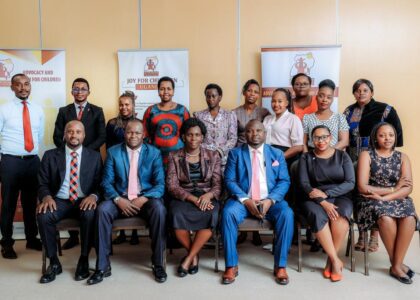
THE ROLE OF CIVIL SOCIETY ORGANIZATIONS IN PEACE BUILDING

Civil Society serves as a pillar of democratic systems, playing an important role in democracy and good governance for pre-and post-conflict societies. CSOs play a critical role in developing, monitoring human rights situations, implementing strategies that promote peace and security, monitoring implementation of agreements, and providing recommendations and information to decision-makers or human rights and advocacy groups.

articles

WHY UGANDA SHOULD ENDORSE THE EASTERN AND SOUTHERN AFRICA INTER-MINISTERIAL COMMITMENTS ON SEXUAL AND REPRODUCTIVE HEALTH AND RIGHTS FOR YOUNG PEOPLE.

In 2013, Ministers of Health and Education of the East African Community (EAC) and Southern African Development Community (SADC) endorsed the Eastern and Southern Africa (ESA) Inter-Ministerial Commitment, which ended in 2020. The Commitment largely aimed at preventing child marriage, Sexual and Gender- Based Violence, new HIV infections and teenage pregnancies.

projects

Advocacy for Enacting of the Sexual Offences Bill and popularizing the National Education Sexuality Framework in Uganda

Joy for Children Uganda (JFCU) is working with Uganda Parliamentary Forum for Children (UPFC) and Uganda Women Parliamentary Association (UWOPA) to review the Sexual Offences Bill. The Bill provides positive provisions towards addressing sexual violence, including protecting sexual assault survivors’ rights during criminal proceedings and criminalizing sexual harassment by people in positions of authority.

articles

THE FIGHT AGAINST CHILD LABOR

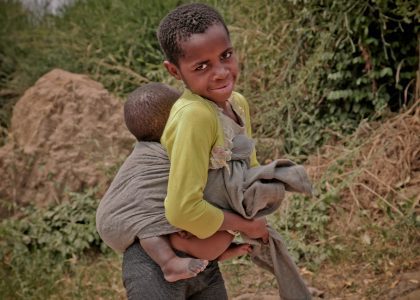
Poverty is the primary reason children are sent to work. Sadly, child labor keeps children from getting the education they need to break the cycle of poverty. According to the International Labor Organization (ILO), a U.N. agency, about 70% of child laborers globally work in agriculture. Others work long hours in factories, domestic service, or forced labor, such as child soldiers and children exploited in the commercial sex trade.

articles

Keeping Girls in School through providing Menstrual Hygiene Support

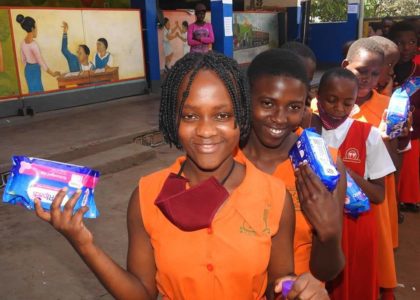
According to World Vision International (WVI), in Uganda, insufficient Menstrual Hygiene Management in schools contributes to a drop out of up to 10 percent of girls at the primary level. The SNV/IRC study report (2012) on Menstrual Management in Uganda also shared the relationship between menstruation and absenteeism in schools by girls noting that 60 percent of the girl-pupils absented themselves from schools during their menstruation.

articles

Children with special needs and access to social services

A right to education is a universal right that is applicable to all children everywhere including children with special needs. It is challenging for them to access education in Uganda. First and foremost, the negative attitude of communities is one of the barriers that affect children with disabilities in relation to access education.

articles

CHILD LABOR IS A CHILD RIGHTS VIOLATION

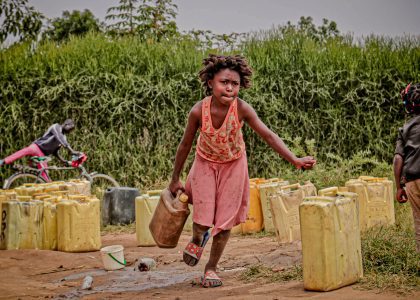
According to UNICEF nearly 1 of 10 children in the world are subjected to child labor with some forced into hazardous work through trafficking, the child employment rate in rural areas is 34% while in urban areas it is 11% In Kampala, Uganda’s capital city.

articles

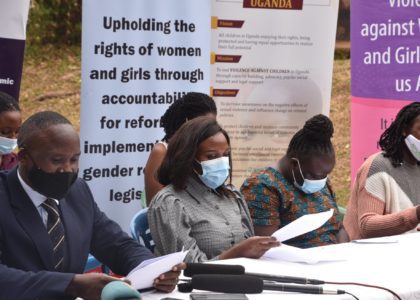
Joint press conference to address issues of escalating cases of teenage pregnancy & the right of pregnant girls to return to school.

Uganda recorded a total of 290,219 teenage pregnancies from January to September 2021, translating to over 32,000 monthly (UNFPA UGANDA 2021) and this been highly attributed to the covid-19 induced lockdown where learners were out of school for close to 2 years. Many girls were sexually abused by their relatives, neighbors, teachers and their peers and in some communities; pregnancy was seen as a way out of poverty